Reviewing the Cute Green Baby Hippo Bib Small
As a designer who has spent countless hours digitizing and testing files for client work, I approach every new machine embroidery design with a critical eye. It is not just about whether the image looks cute on a screen; it is about how it behaves under the needle, how it wears after washing, and whether it adds genuine value to a finished product. Recently, I evaluated the Cute Green Baby Hippo Bib Small, an In-The-Hoop (ITH) project intended for newborns up to six months old. This review breaks down its practical application for crafters, Etsy sellers, and boutique owners looking to expand their nursery collections.
First Impressions and Visual Personality
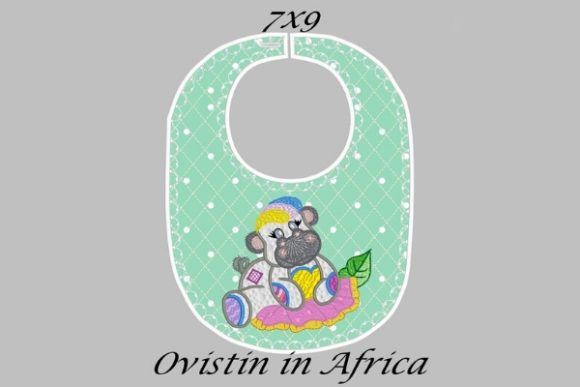
The initial appeal of this design lies in its softness. The choice of a green baby hippo immediately evokes a sense of calm and nature, which is ideal for the Nursery category. Unlike aggressive or overly complex characters, this hippo has a rounded, friendly demeanor that translates well into stitch work. For an embroidery designer, the layout suggests a balance between fill stitches for the body and potentially satin or running stitches for finer details like eyes or outlines. The "fresh touch" mentioned in the description is accurate; it feels modern yet timeless, avoiding trendy elements that might date the product quickly.
When visualizing this as a digital embroidery file, I look for clarity. Does the shape hold up when scaled? Since this is specified as a "Small" design, the proportions must be precise to ensure the hippo remains recognizable without becoming a blob of thread. The ITH format is particularly appealing because it promises a clean, professional finish with minimal raw edges, a key selling point for high-end handmade products.
Real-World Application and Market Fit
Let us consider a real-life scenario. Imagine you are preparing a custom gift set for a baby shower. You want to offer something beyond the standard store-bought items. Using the Cute Green Baby Hippo Bib Small, you can create a coordinated set that includes the bib, perhaps paired with a matching burp cloth or a small stuffed toy. Because the design is ITH, the construction is streamlined, allowing you to produce multiple units efficiently—a crucial factor for any small shop product or craft business aiming for profitability.
Beyond bibs, this design has versatility. While primarily intended for babies, the motif could be adapted for other items if resized appropriately, such as a patch on a toddler’s backpack or a decorative element on a nursery pillow cover. For an Etsy seller, the keyword potential is strong. Terms like baby embroidery, personalized gift, and handmade product align perfectly with this item. Customers searching for unique, non-mass-produced baby gear are often drawn to specific animal themes, and a green hippo offers a gender-neutral option that broadens your customer base.
Technical Performance and Stitching Considerations
From a technical standpoint, ITH designs require precision. The tutorial included with the Cute Green Baby Hippo Bib Small is a vital resource. Even experienced embroiderers benefit from step-by-step guidance when dealing with the layering inherent in ITH projects. The success of the final product depends heavily on the interaction between the stitch density and the fabric choice.
For a baby item, comfort is paramount. High stitch density can create a stiff patch that might irritate sensitive skin. Therefore, selecting the right stabilizer is non-negotiable. A soft, cut-away stabilizer might provide necessary support without adding bulk, while a tear-away could be sufficient if the fabric is stable enough. I recommend testing the design on scrap fabric first. Check how the thread colors blend. A vibrant green against a white minky or cotton fabric will pop, but on a patterned background, ensure there is enough contrast for the hippo’s features to remain visible.
Another consideration is the hoop size. Since this is a small design, it likely fits within standard 4x4 or 5x7 hoops, but you must confirm this before purchasing. Misjudging hoop requirements can lead to wasted time and material. Additionally, inspect the small details. Are the eyes too small to stitch cleanly? Do the curves of the hippo’s body require careful trimming during the ITH process? These are the nuances that separate a amateur-looking item from a professional boutique product.
Navigating Fabric and Material Challenges
Not all fabrics behave the same way. When working with stretchy materials like jersey knits, which are common for baby clothes, stabilization is even more critical to prevent puckering. If you plan to use this design on a textured fabric like terry cloth, be aware that small details might get lost in the pile. In such cases, a slightly larger version of the design or simplified stitch paths might be necessary, though since this is a pre-digitized file, you are limited to the existing structure.
Dark fabrics present another challenge. If a customer requests a black bib, the green hippo needs to be bright enough to stand out. You may need to adjust thread colors or add a light-colored underlay or backing to ensure visibility. Always test your thread colors on both light and dark backgrounds. A mockup in black and white can also help you assess the contrast and shape definition without the distraction of color.
Commercial Viability and Brand Consistency
For commercial embroidery projects, consistency is key. If you are building a brand around nature-inspired baby goods, the Cute Green Baby Hippo Bib Small fits seamlessly. It reinforces a cohesive aesthetic that customers can recognize. However, before selling finished items or digital products, you must verify the license terms. Does the purchase allow for commercial use of the physical items? Can you sell the digital file itself? Most designers allow selling finished physical goods but restrict the redistribution of the digital file. Clarifying this protects your business and respects the creator’s intellectual property.
Moreover, consider the perceived value. An ITH bib looks more intricate and labor-intensive than a simple applique, justifying a higher price point. It signals quality and attention to detail, which builds customer trust. When photographing your finished product for printable mockups or online listings, highlight the clean edges and the soft texture of the embroidery. Show the bib in use, perhaps on a baby or styled with other nursery items, to help buyers visualize the product in their lives.
Final Designer Notes
To maximize the potential of this design, keep these practical tips in mind:
- Test on scraps: Always run a test stitch-out on your intended fabric to check for registration issues or tension problems.
- Check stabilizer compatibility: Ensure the stabilizer supports the fabric without adding unnecessary stiffness.
- Verify hoop size: Confirm the design dimensions match your machine’s capabilities.
- Review thread contrast: Choose thread colors that enhance the hippo’s features against your chosen fabric.
- Follow the tutorial: ITH designs have specific sequencing; deviating can lead to errors.
- Confirm licensing: Understand your rights regarding commercial sales of finished goods.
In conclusion, the Cute Green Baby Hippo Bib Small is a solid addition to any embroidery designer’s library. It offers a charming, marketable design that, when executed with care, results in a high-quality, comforting item for babies. Whether you are an experienced apparel decorator or a hobbyist making gifts for friends, this design provides a reliable foundation for creating beautiful, lasting memories. Just remember that the magic lies not just in the file, but in the thoughtful choices you make regarding fabric, thread, and technique.